Showing posts with label bureaucracy. Show all posts

Friday, June 15, 2007

Why the President is a Puppet

To understand why the President is a puppet, it is important to think of the President as primarily a communications hub. The volume of sensitive information passing across the President's desk makes the President a valuable intelligence-gathering target.

This is why the President is always surrounded by so many people: it is important to pass information directly from person to person because, for many communications, the use of communications technology is a counter-intelligence liability.

The President probably doesn't carry a cellphone all that often. Since the FBI can access your cellphone's GPS chip, or can remotely activate the microphone, so can some disgruntled Nokia or AT&T employee. The President needs to have many person-to-person communications for security reasons.

COINTELPRO AND THE PATRIOT ACT, THE WTO, CLIMATE CHANGE, THE GREEN RUN, PROJECTED OIL RESERVES, ALTERNATIVE ENERGY, THE 1996 COMMUNICATIONS ACT, NOAM CHOMSKY, SEVENSTORIES, THE TUSKEGEE EXPERIMENTS, HOWARD ZINN, USA WEAPONS EXPORTS, LAND MINES, OIL AND WARS, HUMAN RIGHTS ABUSES, TORTURE, PSYOPS COMES HOME , POLITICAL PRISONERS IN THE USA, THE CREEL COMMISSION, MEDIA CONSOLIDATION AND FREE SPEECH, THE BILL OF RIGHTS, GREG PALLAST, BBC WORLD, FEED THE CHILDREN, DEMOCRACYNOW.ORG, LABOR RIGHTS, SIAPAM AND DELAY, RAINFOREST ACTION NETWORK, NATIONAL DEBT, LARGEST EXPORT OF THE USA, MISSLE DEFENSE AND THE ARMS RACE, THE MILITARY BUDGET, THE MITLITARIZATION OF SPACE, BIOTECH, WHITE PHOSPHOROUS AND FALLUJAH, WARS CRIMES OF THE BUSH ADMINISTRATION, NEWS CORP AND MEDIA CONSOLIDATION, WHAT DO ATTORNEY GENERALS DO?, BILL CLINTON AND THE WTO, AND BILL CLINTON AND THE 1996 COMMUNICATIONS ACT
The content of the communications with which the President is entrusted contain implicit or explicit instructions regarding how the President ought to behave. Either a piece of information is not to be divulged, or it may only be divulged under certain circumstances. Every communication the President receives says either "do this" or "don't do this," and the President is entrusted with skillfully discerning and faithfully following these instructions.

In many instances, specific phraseology is important. Between the nuances of jargon, inner-circle meetings, and the spin-doctor's propaganda marketing prescription, one word or a few letters can make a world of difference to different people. "At the end of the day," "make no mistake," "going forward," "support the troops," "family values" -- people pledge allegiance to these terms. The President needs to identify which phrases serve as proper nouns, which as verbs, which as convenience, which as ornament; and the President needs to know how to act accordingly.

In many instances, the President may not know what a specific phrase means to a specific group of people, although the phrase may fit quite comfortably inside a sentence of otherwise ordinary speech. The President just follows orders. It was no excuse at Nuremberg, but it's how our present government operates. This is why third-party candidates have difficulty breaking into Washington politics: third-party candidates are outsiders who don't know what phrases motivate various interests, or which phrases tell various interests "I understand what you really want, and I'll help you get it." The consolidation and perpetuation of this pass-phrase system is why the central government seeks to expand its influence into local realms.

Most of the Administration doesn't turn over every four years. The phraseology and popular parlance of various departments have a life of their own, to which any new President must adapt. The concept of "Homeland Security" was already in use among various military circles in the 1990's. This is a concept which has lived in the Administration for years. Sami G. Hajjar discusses "homeland defense" in the 1998 report, "Security Implications of the Proliferation of Weapons of Mass Destruction in the Middle East." The Department of Defense Advanced Concepts Technology Demonstration program proposed the Homeland Security Command and Control several months prior to September 11, 2001. Although I can't recall ever thinking of my country as my "Homeland" until after 911, it would seem a good number of military professionals have been working out this doctrine for some time. The Department of Homeland Security is not something the President thought up in a pinch, it is something the President assembled for entrenched political interests. The President may not be fully aware of the scope of the communications he issues, but one thing is clear: whenever the President talks about "homeland security," there are groups of people all over the place who behave according to decades of doctrinal development.

And so the puppet is also a puppeteer, albeit one with a limited understanding of the drama that is unfolding. And so this is why a Washington outsider would serve the American people better than a career politician from the ranks of the political aristocracy: an effective outsider would need to ask all sorts of people what they mean when they speak, whereas a Crown Prince who has lived his life immersed in the secret incantations need not understand them to see how they are used.

Monday, June 04, 2007

2008 Elections - USA #1

The best thing that might come to the United States from the War in Iraq is not oil, but an opportunity to examine the collective hallucination of USA #1 that makes our people so easily manipulated.

Think for just a minute: we denied blacks and women suffrage for most of our history, and now everything is run by corporations. The dollar has subverted the vote. When have we ever been THE GREAT DEMOCRACY? To what do we lay claim with our attitude of moral superiority? We were just as willing to destroy the planet as the Soviets, for the sake of a claim to victory in the Cold War.


We are started quite young. Once the hallucination of USA #1 takes hold, various "leaders" can lay claim to accounts of how and why USA #1 came to be, and what we can do to ensure that USA #1 continues.

Of course, everybody wants USA #1 to continue. USA #1 feels good for Americans. USA #1 is good for China. But it's a lie, and one that Democrats are just as willing as Republicans to exploit.

What is a vote for Barack Obama? We feel good to have overcome slavery. What an odd thing to feel so good about. As though it were ever sensible to keep humans in such brutal bondage. It is like we are children making our first marks in ink on paper, at once celebrating the completion of our latest and greatest novel. Preposterous.

What is a vote for Hillary Clinton? We prefer that the Revolution had never taken place? Give us back a Monarchy? Sure the Democrats can be tough on Terror. When Bill Clinton signed CALEA, he did just as much to get the permanent war started as George Bush did by signing PATRIOT.

What is a vote for a Republican? They align themselves with the 1/4 of Americans who "don't believe" in evolution, have never heard of global warming, don't know whether New York is east or west of the Mississippi, and can't name more than two or three other nations currently in possession of nuCLEAR weapons. Republicans are scoundrels, all of them, to exploit such people on such a scale.

Two-party rule is broken, and we should not continue to legitimize it.

In such a political climate, the only way to be sure you're not voting for a Fascist is to vote for yourself. Unless, of course, you ARE a Fascist, in which case you should write in "America Jones" wherever you vote next.

Sunday, April 02, 2006

Social Criticism in Modern Times and Brazil


Fig. 1. Demonstrating the use of visual allusion in Terry Gilliam's Brazil; here, a reference to the famous Odessa Steps sequence in Battleship Potemkin.


Fig. 2. The workplace. Early establishing shots from Charlie Chaplin's Modern Times (left) and Brazil (right).


Fig. 3. Entangled in society’s problems. Gears in Modern Times (left) represent the Victorian sensibilities that led to the commodification of labor, and systems of social manipulation based on the control of access to labor (and hence corporate conflict with the unions). Wires in Brazil (right) represent the insights of industrialization (such as innovations in communication and management spawned by the railroads) that led to the commodification of information, and systems of social manipulation based on the control of access to information.


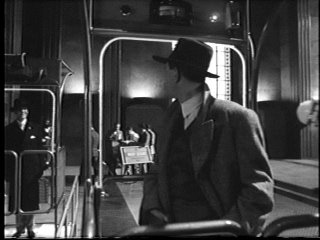
Fig. 4. Guards and gates controlling access to labor in Modern Times (left, at a factory); metal detectors and automated ID checks controlling access to information in Brazil (right, at the Ministry of Information).


Fig. 5. Closing shots from Modern Times (left) and Brazil (right). In both cases, the protagonists are seen leaving behind them long straight roads across relatively featureless terrain, and heading into scenic mountain country. Note the telephone wires at the road edge in Modern Times, compared to the advertisements at the road edge in Brazil; in either case this detail can be read as prophetic of coming battles or as suggestive of a course of action. In the case of Brazil, the final shots imply a strong cynicism, while Modern Times ends on an optimistic note.


Fig. 6. Penned-in by the demands of society. Note the picture of the Great Emancipator on the wall in Chaplin’s cell (left).


Social Criticism in Modern Times and Brazil.


Satire is a popular form of social criticism in part because humor can diffuse attacks on social practices to which audiences are often a party. Modern Times used satire to criticize the industrial infrastructure that keeps so many people in poverty (by controlling who gets to work), and Brazil used satire to criticize the information infrastructure that keeps people ignorant of the ways in which they are manipulated (by controlling what people are able to know about their own lives).

Both films, which use cinema to communicate their critique, use a medium that is in many ways synonymous with social manipulation: the earliest Soviet theorists recognized the potential of cinema for mass indoctrination just as well as contemporary marketers recognize the potential of cinema for the broad manufacture of consumer demand. Humor, then, is also a way of addressing potential charges of hypocrisy in satire.

A Contemporary perspective suggests a certain irony in Chaplin’s use of cinema for his critique: cinema was emblematic of industrialization, a marvel of technical innovation and precision, and a cultural phenomena. The manufacture of the image, control of the image, and demand for the image moreover are the sustaining forces of capitalism (brand is image).

Paul Valery suggested that the prehistoric valuation of the image was related to both:

1) the degree to which "prehistoric" representations were abstracted from reality (more valued the less recognizable),

as well as

2) the infrequency with which "prehistoric" peoples encountered images.

The image, photographic media, and the motion picture in particular represent both the bleaching of the sacred from the image (at 24 frames each second, in the case of motion picture film), and the commodification of the sublime (through the mass-re-production of the image, which was originally the product of sacred behaviors).

A strange new medium - which, from this perspective, is so thoroughly corrupt - would seem an odd choice for a message with the social conscience of Modern Times. Likewise Brazil, for its criticism of advertising and marketing, would have had no hope of communicating with anybody were it not for the advertising and marketing infrastructure that brought the film to theatres.

Moreover, the use of video surveillance systems figure prominently in each film at times, signifying to audiences that it is not lost on the filmmaker that the moving image figures prominently in broad attempts to manipulate society. The two filmmakers seem to have shared a prescient vision of how it feels to live in a society dominated by policing behavior. The Pavlovian manipulation of behavior in either film depicts the effects of the surveillance society on the individual. Each film controls the image to indicate how the image is used to control individuals. The films are not ironic, but cautionary.

It is precisely control that is at issue in either film: each film argues for the rights of the individual, but places the protagonist in an environment that overwhelms him with opposition. Like the protagonist in George Orwell's 1984, the preoccupations of either film's protagonist concern a struggle to find some small bit of private comfort. The protagonist in either film, however, is left with very little control over his own life: the Tramp is continually put out of work, can’t find a place to live, and society wants to deny him his love. Sam Lowry throughout Brazil is in a constant state of confusion, can’t keep his house in order, and society doesn’t want him to love what he loves. Both protagonists take new jobs for the sake of their love; and both protagonists are denied by systems of social control the happiness they seek.

Issues of control in each film center on what each filmmaker viewed as the vital commodity that power structures seek to exploit. In Modern Times, the most important commodity in industrialized society is labor. To regulate the efficiency of the workforce (such as with the automated feeding machine in Modern Times, or in Brazil Sam Lowry’s automated apartment connected to his alarm clock), industrialists sought to control the commodity value of labor by manipulating supply and demand. Of course, demand always increases -- both for access to the means of production and for the product -- but if workers can be made to be more efficient, then the same amount of labor can yield more product, and the retail value of labor itself can be manipulated.

In Brazil, we are shown a society that is regulated like a bureaucracy which controls information to control the cost of controlling the populace. Information retrieval charges, arrest charges, and interrogation charges describe a society that places a premium value on information; at the same time, the movie is populated with characters who don’t know how to perform their jobs, who can’t afford to find out where the Gestapo have taken their loved ones, and who are left without any real information whatsoever, and thus entirely unable to take control of their own lives (because information, in Brazil, IS control).